


WHITE-TAILED-KITE-1-333A2417-WEB
There are things you can’t reach. But you can reach out to them, and all day long.
The wind, the bird flying away. The idea of God.
And it can keep you as busy as anything else, and happier.
– Mary Oliver
Along the West Coast and the southern tier of the U.S. you’ll find a family of raptors called kites. They include the Mississippi kite, hook-billed kite, snail kite, swallow-tailed kite and white-tailed kite.
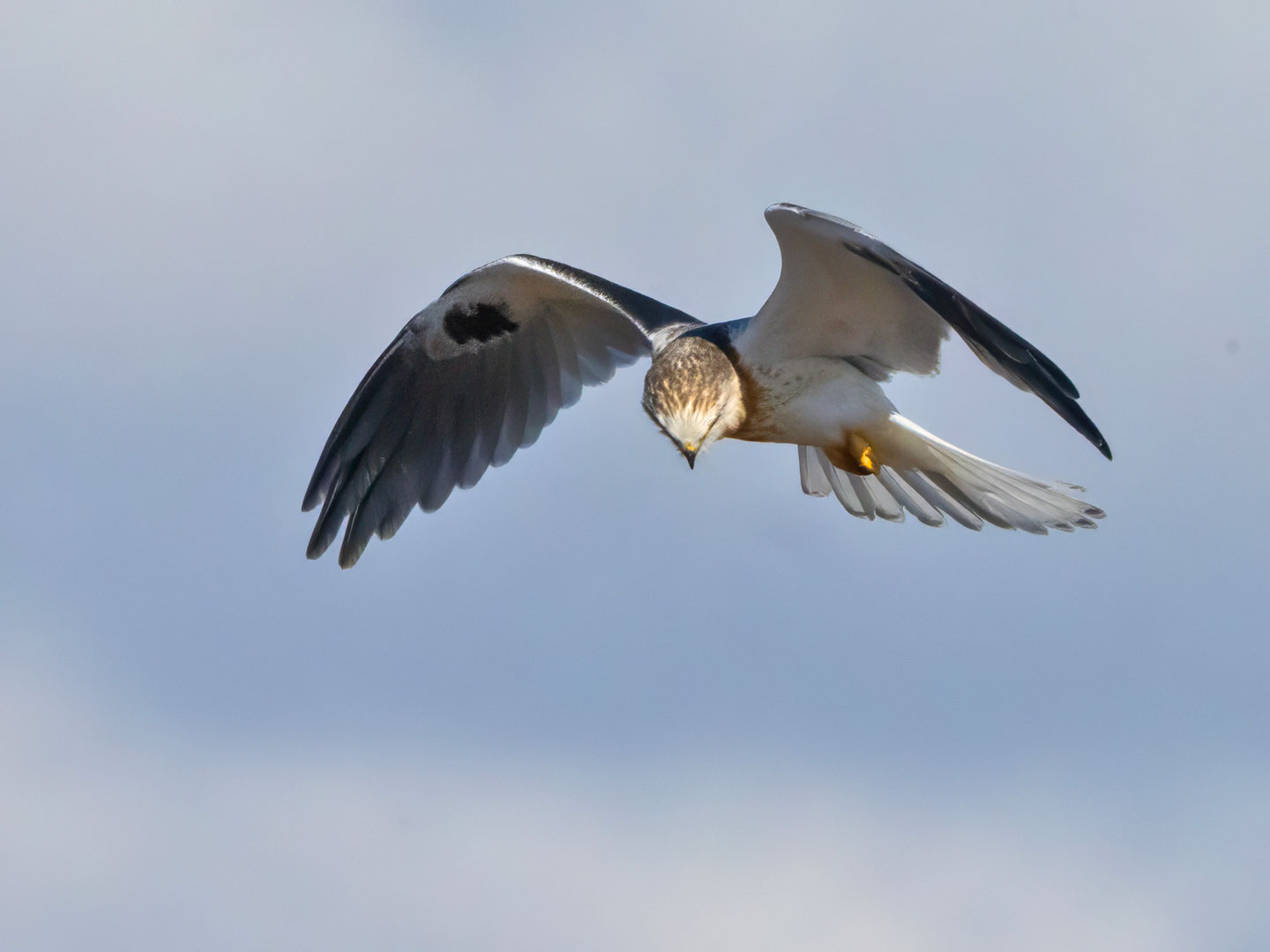
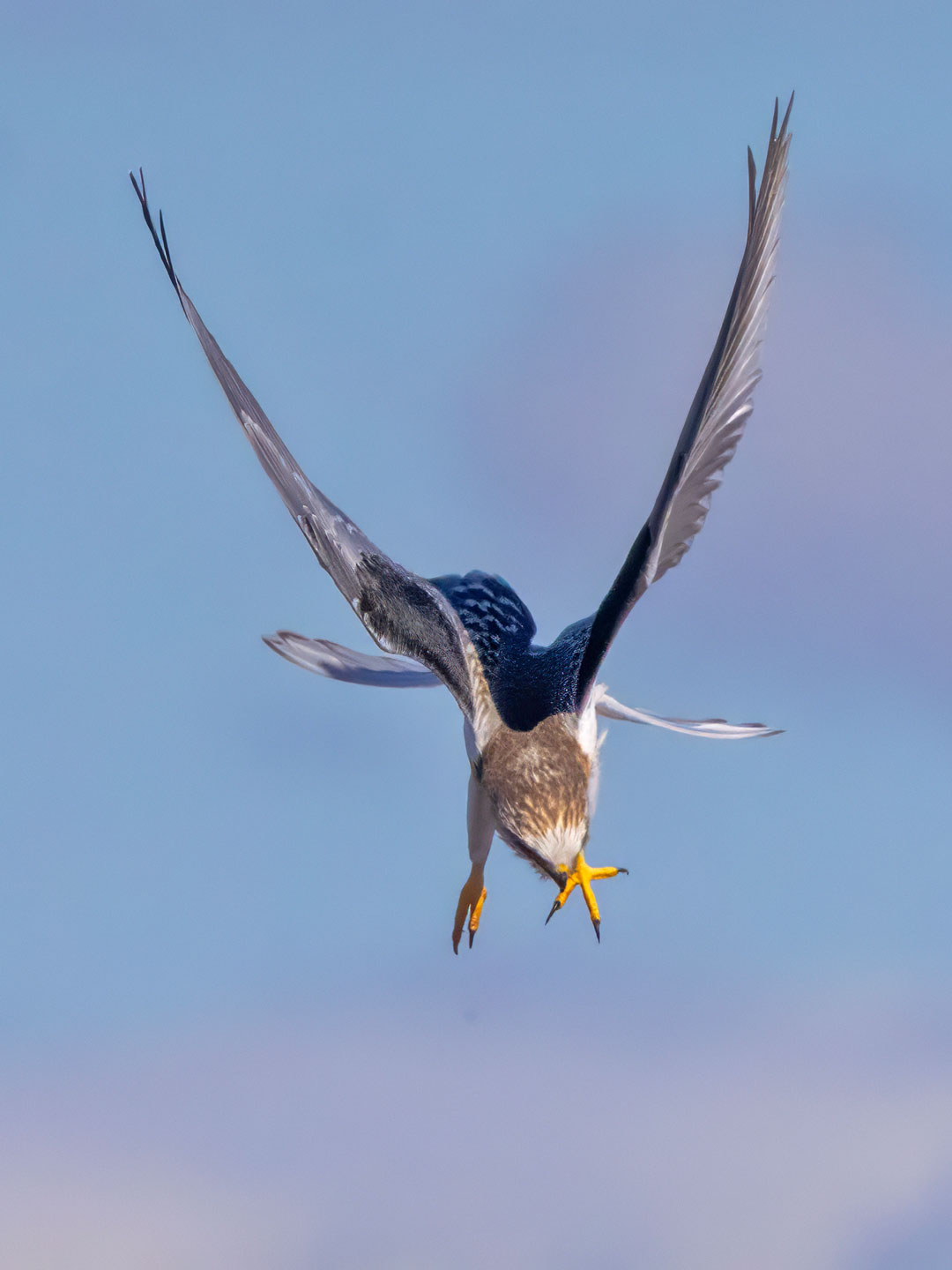
The first time I saw one, I was standing outside my local bank waiting to use the cash machine. (I mention this to point out that even in the midst of mundane human activity one can sometimes still see wild nature.) Next to the building was a meadow framed by trees. Above the field, a large white bird hovered. Its wings rhythmically worked the air to keep it afloat in one spot as if suspended. Without warning, it plummeted to earth and disappeared in the tall green grass. Later, I would learn that this was a white-tailed kite (Elanus leucurus), the only kite species found in California.
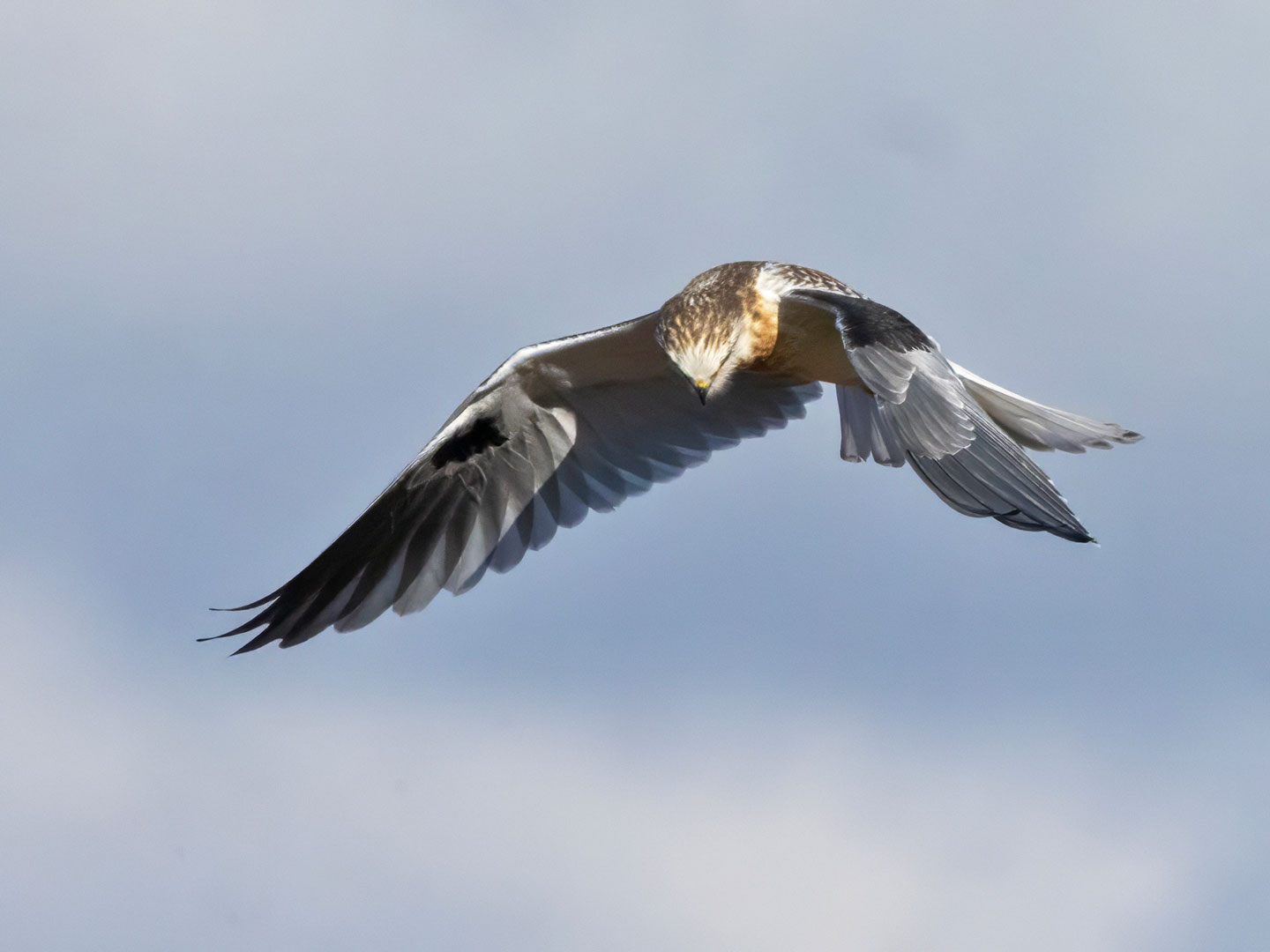
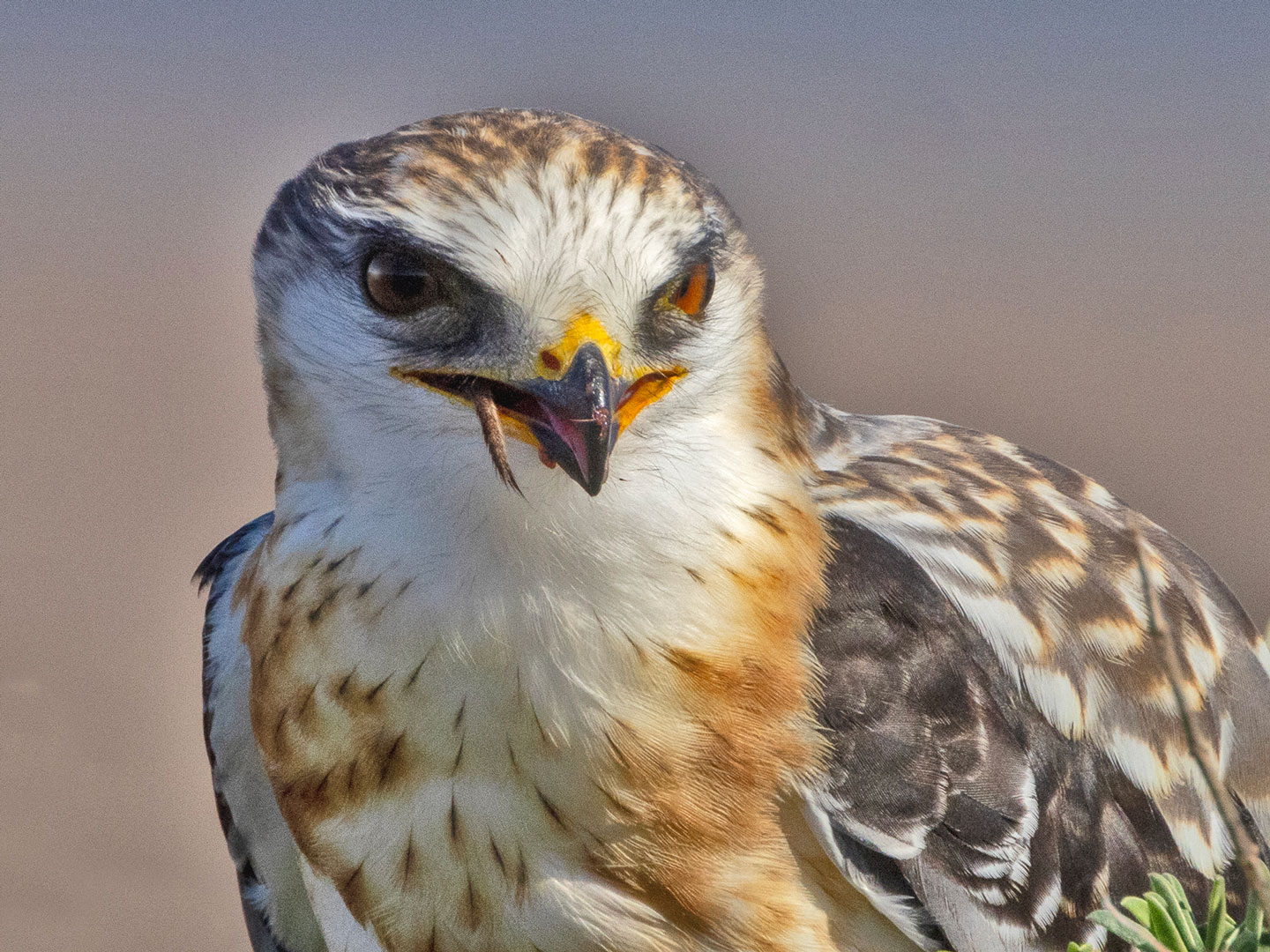
This hovering behavior is called “kiting.” I have seen other birds do this, including terns, northern harriers and red-tailed hawks, but kites are the true masters of flying in place while surveying the ground below for prey. They hang in the air as if dangling from a cloud. Their white, black and gray plumage give them a ghost-like beauty. Their red eyes under heavy black brows pierce the air. The fluttering of their wings have the energy of hummingbirds or dragonflies or large angel-like fairies.
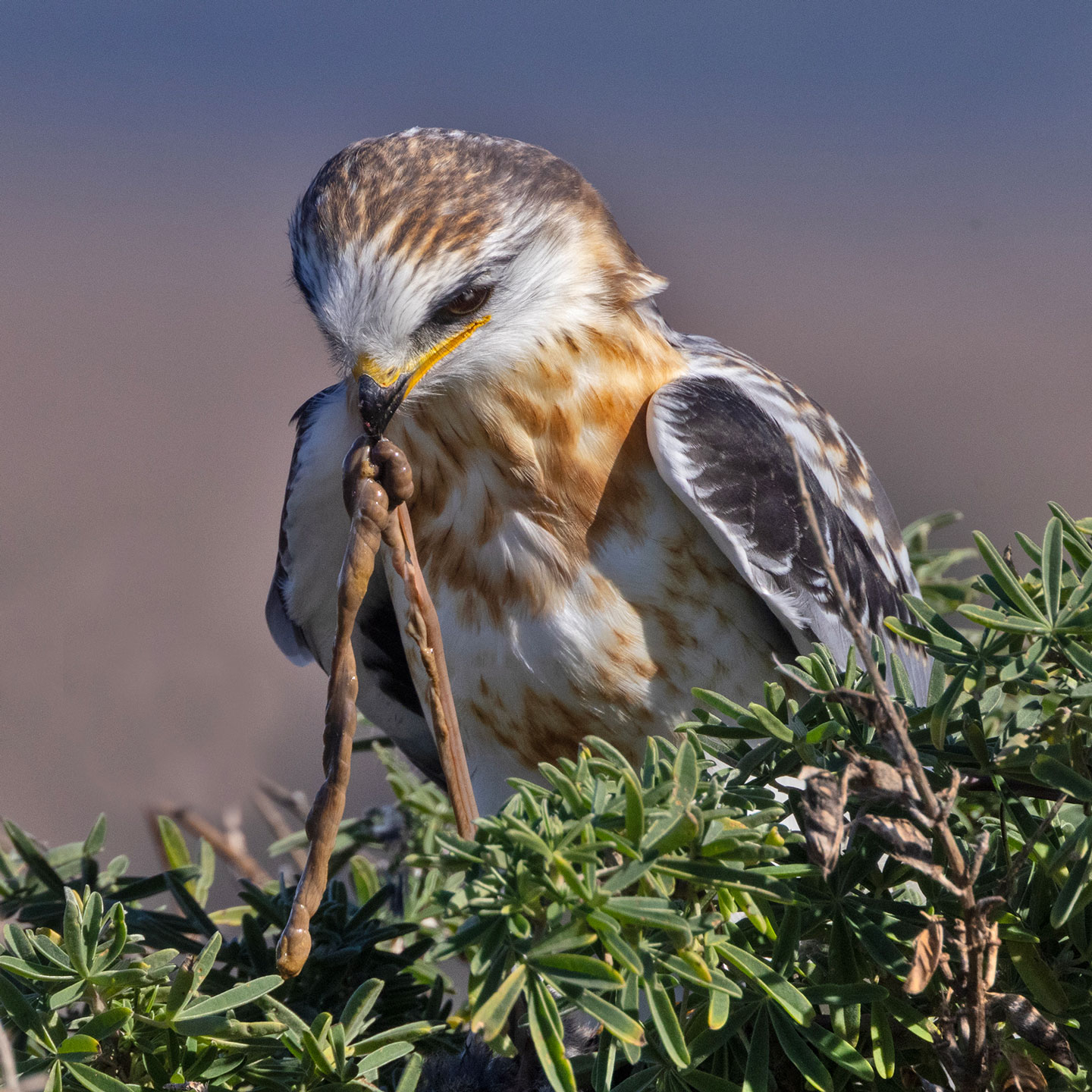
Two weeks ago, shortly after stepping out of my car at Moss Landing State Beach, I spotted the flapping of a kite above me. It is always an extraordinary moment to see a kite. This bird, however, did not have the smooth, sleek white and gray features I was familiar with, but sported a rust-red necklace of feathers and a brown back. Ah, a juvenile, I guessed, although I had never seen one before. Suddenly, it plunged into the brittle dried grass, then burst back into the air and landed in a bush about 40 feet from where I stood.
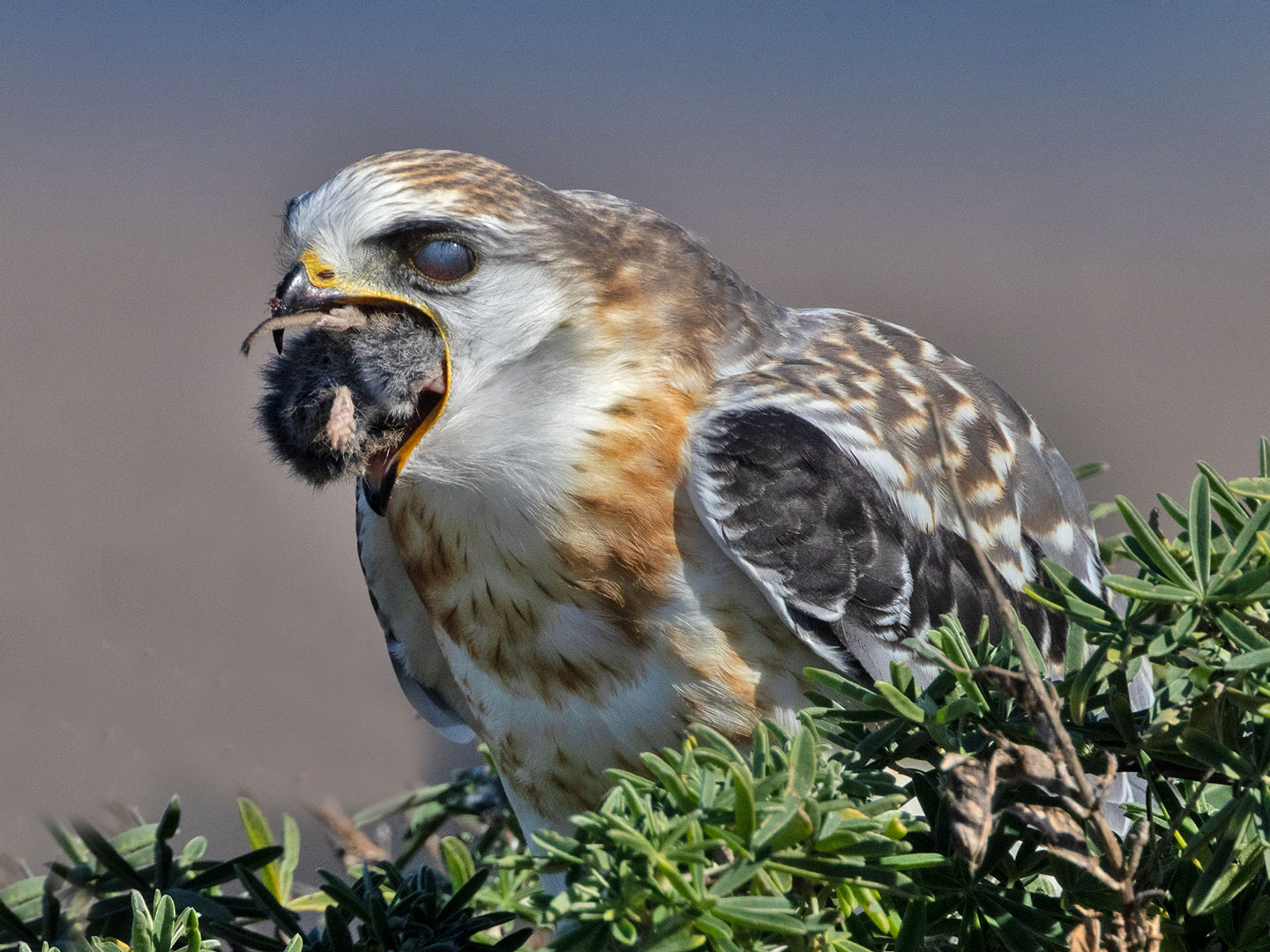
For the next 30 minutes, the hungry bird gorged on the rodent secured in its talons. First it disemboweled the animal, consuming the flesh by taking both small bites and swallowing whole entrails. The kite finished the meal by downing the entire furry hollowed-out carcass.
Soon afterward, the kite flew off and disappeared. It was time to rest and digest after having succeeded in finding its daily rations. The hunt, the capture, the feast. The simplicity of life. Both brutal and beautiful.
It is said that white-tailed kites sometimes gather in communal roosts of 10 to 40 or more during non-breeding season. I have never seen this. I have only spotted one, or possibly two kites, at a time. What a sight it would be to see a whole tree filled with these elegant raptors!
Instinctual courtship displays drive many birds to perform unusual rituals. The male white-tailed kite will present gifts, usually a small rodent, to the female before she lays eggs. Sometimes the female will receive the gift by flying to the male, turning upside down and grabbing the prey from his talons mid-air. This would also be a once in a lifetime event to witness!
Please leave a comment so I know you were here.

WHITE-TAILED-KITE-19-333A1497-WEB
WHITE-TAILED-KITE-20-333A1499-WEB
WHITE-TAILED-KITE-21-333A1500-WEB
WHITE-TAILED-KITE-17-333A1554-WEB
WHITE-TAILED-KITE-10-333A2118-WEB
WHITE-TAILED-KITE-6-333A2310-WEB
Great blog and beautiful photos, Carla! All of us reading your blog appreciate, I’m sure, the way you describe the birds, animals, and wildlife that you so often capture with your photography. Your description of the kite, a bird I was unfamiliar with, and its behavior is wonderful. Always fun to open your blogs!
Thank you! Glad you enjoy it!
Wonderful photos and info – thanks for sharing. We had a pair of kites here a few years back – and they were keeping our population of gophers down. Fascinating to watch.
Awesome! In the picture where it is swallowing the whole carcass, it looks like its eye is covered by one of those “third lids” that cats have also. Do kite eyes have a “third lid”?
Yes, they do! You are correct! I’m glad you noticed it. Maybe it didn’t want to get any loose fur or entrails in its eyes. A small percentage of bird photos I take, the birds “third eye” is closed giving it a strange look. Maybe I will write a blog about those eyelids! It allows them to protect their eyes while still giving them some vision.